
The Challenge
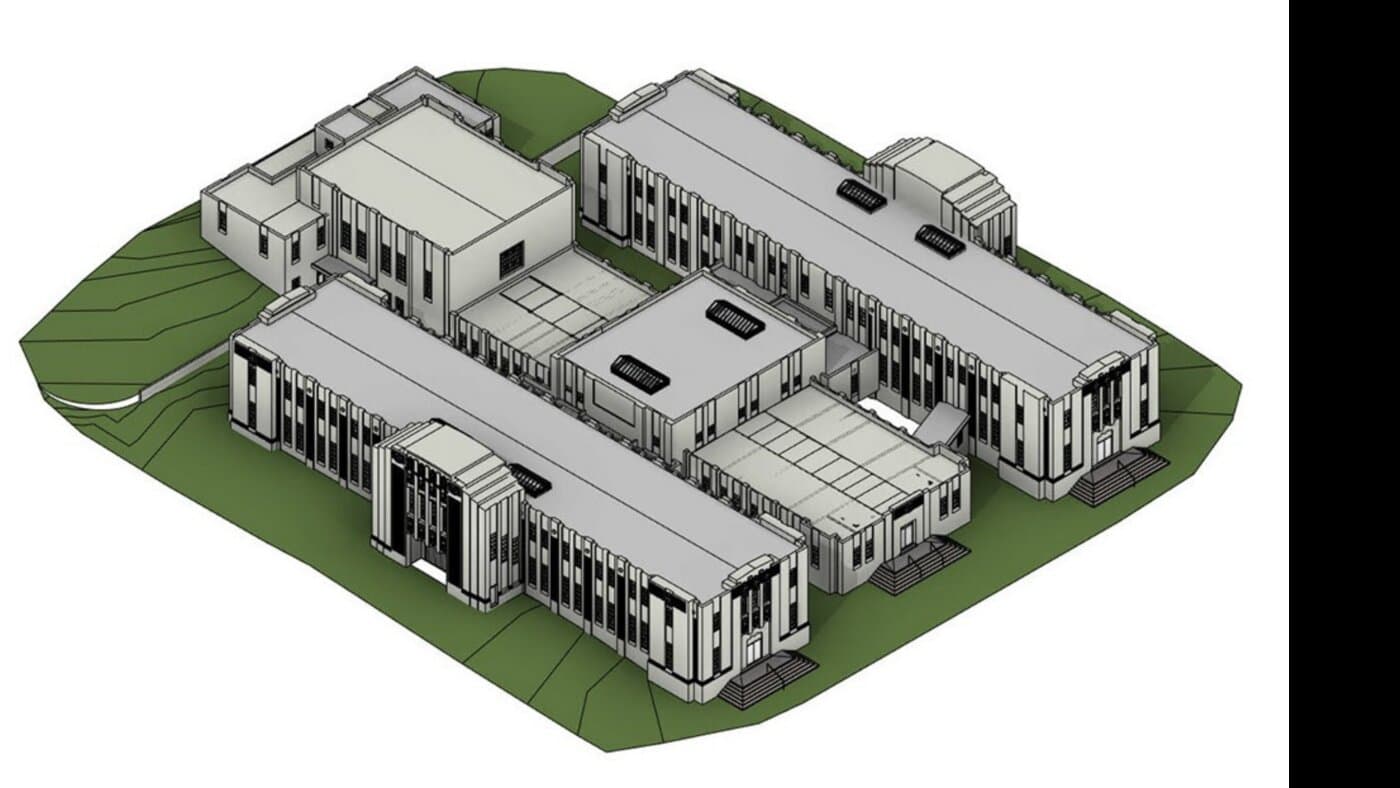
Coordinate MEP services across a 45,000 m² hospital complex with infection control zoning requirements that added a compliance layer beyond standard geometric clash detection.
The Outcome
All infection control zone boundary crossings verified through Stage 4. Zero pressure cascade violations in the ventilation coordination model.
The
Infection control compliance layer
Standard clash detection does not account for pressure zone boundaries. The project needed a coordination approach that treated infection control zoning as a hard constraint, flagging any service crossing a zone boundary regardless of geometric clearance.
Multi-department complexity
Six clinical departments each had different ventilation requirements, pressure regimes, and medical gas configurations. The coordination team needed healthcare MEP expertise, not just general BIM coordination capability.
Clinical engineering integration
Medical gas routing and isolation valve placement were being managed by clinical engineers outside the BIM coordination workflow. These systems needed to be incorporated into the federated model to avoid conflicts discovered during commissioning.
What
What
Zone boundary compliance
Medical gas routing
How
Zone boundary spatial model
We established a dedicated spatial layer in the federated model representing every pressure zone boundary as a geometric element. This allowed zone boundary checks to run as part of each clash cycle, catching crossings that would have been invisible to standard detection.
Healthcare-specific clash matrix
The clash matrix was configured with healthcare-specific rules: services crossing zone boundaries were flagged regardless of geometric clearance, and medical gas routes were checked against both physical clashes and clinical isolation requirements.
Clinical engineering integration protocol
We established a fortnightly review with the clinical engineering team where medical gas routing and isolation valve placement were incorporated into the federated model. Changes were verified against commissioning requirements before being accepted into the coordination model.
The
Healthcare MEP coordination requires a different review sequence to commercial or residential projects. The infection control zoning creates a layer of requirements that are not visible in the model geometry — two rooms that are physically adjacent may be in different pressure zones, with fundamentally different ventilation supply and extract requirements.
We were appointed to lead MEP coordination across a six-department hospital complex, with a specific brief to ensure that infection control zone boundaries were treated as hard coordination constraints throughout the model.
The first step was establishing the zone boundary model — a spatial layer in the federated model that represented every pressure zone boundary as a geometric element. This allowed us to run zone boundary checks as part of each clash cycle, not as a separate review.
MEP services crossing zone boundaries were flagged as coordination issues regardless of whether they geometrically clashed. Each crossing was reviewed against the infection control strategy to confirm the correct assembly and sealing specification.
The clinical engineering team conducted parallel reviews of medical gas routing and isolation valve placement. These were incorporated into the federated model at Stage 3 and verified against commissioning requirements before the Stage 4 gate.
What
Zone boundary model
A spatial model layer representing every pressure zone boundary, maintained as a live coordination element throughout the project and updated when the infection control strategy changed.
Federated coordination model
Continuously maintained model across six departments, with weekly clash detection incorporating both geometric and zone boundary checks.
Zone crossing verification report
A documented verification that every service crossing a zone boundary had the correct assembly and sealing specification, reviewed against the infection control strategy.
Stage 4 coordination sign-off
A comprehensive sign-off report confirming zero pressure cascade violations and all zone boundary crossings verified against the clinical requirements.
Technology
“The zone boundary model was the piece we didn't know we needed. Having it as a live element in the federation meant we caught compliance issues in coordination rather than in commissioning.”
Project Architect, Lead Consultant
Client Representative